Welcome to WordPress. This is your first post. Edit or delete it, then start writing!

Welcome to WordPress. This is your first post. Edit or delete it, then start writing!
Pest Ex is a professional pest control company serving homes and businesses across Stockton-on-Tees, Darlington, Middlesbrough, Hartlepool and beyond, offering comprehensive pest management solutions backed by decades of experience. Founded by experienced pest control professionals with over 30 years’ combined expertise, Pest Ex has built a solid reputation for quality, reliability and tailored service. The brand itself was launched in 2020 as part of the wider Bird Tech Ltd group, combining industry knowledge with a focus on innovation and customer care. All technicians at Pest Ex are fully qualified, BPCA-certified and insured, receiving ongoing training to stay up-to-date with best practice and emerging pest control techniques.



The Pest Ex team is ready to help. Whether you’re dealing with rodents, insects, nuisance birds, or wildlife issues, our fully trained and insured technicians will provide expert advice and effective solutions tailored to your property.
We work with homeowners, landlords, businesses, and public sector organisations, offering both one-off treatments and ongoing pest management contracts.
We understand that pest problems can be urgent. That’s why we aim to respond quickly and arrange visits at a time that suits you.
 Honey Bees
Honey bees play a vital role in pollination and supporting both natural ecosystems and agriculture. Unlike wasps and hornets, they are not aggressive unless directly threatened. However, they can still be a nuisance when they establish colonies in unsuitable locations such as wall cavities and chimneys. At Pest Ex, we prefer not to exterminate honey bees, as they are a highly beneficial species. A cluster of honey bees (often hanging from a tree branch) is known as a swarm. This sounds alarming but it's really just a case of bees moving house! They will usually depart in a day or two, once scout bees have found a suitable location to establish a new home. Where honey bees have formed a permanent hive in your property, Pest Ex will work with local beekeepers to safely relocate the colony wherever possible. This approach protects both the property and the bee population, ensuring a safe, conservation-led solution.
 Solitary Bees
Pest Ex does not treat solitary bees as pests, as they are harmless, non-aggressive pollinators that play an important role in the UK ecosystem. Unlike social bees, solitary bees such as mining and mason bee species do not form colonies or produce large nests, instead laying eggs in small individual burrows in soil, sand, or masonry. While their nesting behaviour may sometimes cause minor cosmetic disturbance in gardens, lawns, or brickwork, they pose no threat to people or property. In most cases, Pest Ex recommends leaving them undisturbed, while offering practical advice to discourage nesting in unsuitable areas where necessary.
 Bumblebees
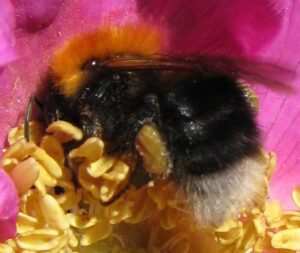
In the UK, there are around 24 native species of Bumblebee, many of which are now, sadly, critically endangered through pesticide use and habitat loss. They are generally gentle insects, crucial to pollination and only sting if directly threatened. Bumblebee colonies are usually small and seasonal, often nesting in places like compost heaps, wall cavities or empty bird nesting boxes. While they can occasionally cause concern when nesting close to homes or gardens, Pest Ex always recommends careful assessment and, where necessary, humane management or relocation advice rather than treatment.
 House Flies
Houseflies are one of the most common nuisance insects found in UK homes and businesses, particularly during warmer months. They are attracted to food waste, rubbish bins, animal waste, and other decaying organic matter, where they breed rapidly and can quickly increase in number. Although small, houseflies pose a significant hygiene risk as they move between contaminated materials and food preparation surfaces, potentially spreading bacteria and pathogens. Effective control focuses on identifying breeding sources, improving sanitation, and applying targeted treatments to reduce active populations and prevent re-infestation.
 Bluebottles
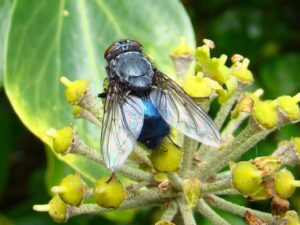
Bluebottles, also known as blowflies, are a common nuisance fly in the UK, easily recognised by their larger size, metallic blue colouring and loud buzzing. They are often attracted to decaying organic matter such as rubbish, animal waste, and carrion, where they lay their eggs. Once indoors, their buzzing becomes a major annoyance and they quickly become a hygiene concern by landing on food preparation surfaces and spreading bacteria. Infestations are most common in warmer months but can occur year-round if suitable breeding conditions are present, particularly around bins or poorly sealed waste areas.
 Clothes Moth
Clothes moths are a common household pest in the UK, known for damaging natural fabrics such as wool, silk, cashmere, and feathers. The real destruction is caused by their larvae, which feed on fibres found in clothing, carpets, upholstery, and stored textiles, often creating irregular holes that appear without warning. These moths prefer dark, undisturbed areas such as wardrobes, lofts, and behind furniture, where they can remain unnoticed while breeding and feeding. Infestations can develop slowly but become widespread if not addressed, particularly in homes with lots of natural materials or long-term storage.
 Black Garden Ant
The black garden ant is the most common ant species found in UK homes and gardens. Small and dark brown to black in colour, these ants often enter properties in search of sugary foods, leaving visible trails along floors, walls, and worktops. Although generally harmless, they can become a persistent nuisance when colonies establish nests under paving, in wall cavities, or close to buildings.
 Common Red Ant
The common red ant is a small reddish-brown species commonly found in gardens, lawns, and around paving. Unlike black garden ants, red ants can be more defensive and may bite if their nest is disturbed, sometimes causing mild irritation. They usually build nests in soil, under stones, or beneath patios, where their tunnelling can create small mounds and disrupt outdoor areas. While not usually a major health risk, they can become a nuisance when colonies are close to homes or seating areas.
 Parasitic Flea
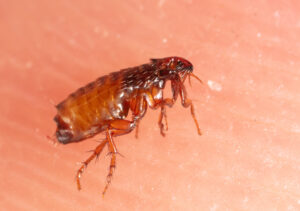
A parasitic flea refers to a flea species that survives by feeding on the blood of a host animal, such as cats, dogs, rodents, or sometimes humans. These tiny, wingless insects are highly adapted for jumping and can move quickly between hosts, making infestations easy to spread within homes and kennels. The most common species in the UK is the cat flea, which, despite its name, will readily infest dogs and other warm-blooded animals as well. Parasitic fleas can cause itching, skin irritation, and allergic reactions, and in heavy infestations may also contribute to secondary infections or tapeworm transmission in pets.
 Common Bed Bug
Bed bugs are small, parasitic insects that feed on human blood, typically at night while people are sleeping. The most common species in the UK is Cimex lectularius, which is highly adept at hiding in cracks and crevices around beds, mattresses, headboards, skirting boards, and furniture. Although they are not known to transmit disease, their bites can cause itchy, red welts, skin irritation, and significant distress, especially during severe infestations.
 Cockroaches
Cockroaches are resilient household pests that can quickly become a serious problem in homes, restaurants, and commercial kitchens. They thrive in warm, damp, and hidden environments such as behind appliances, inside drains, and within wall voids, where they feed on food residues and organic matter. Known for spreading bacteria and contaminating surfaces, cockroaches can pose significant hygiene risks if not dealt with promptly. Because they reproduce rapidly and are highly adaptable, professional treatment is often required to fully eliminate an infestation and prevent them from returning.
 Spiders
Spiders are common household insects across the UK and, while most species are harmless, they can become unwelcome when they appear in large numbers indoors. They often enter homes and businesses in search of warmth and shelter, building webs in corners, lofts, basements, and around windows and doorways. Although they help control other insect populations, their presence can cause concern or discomfort for many people, especially when webs accumulate in visible areas. In cases of heavy activity, professional pest control can help reduce numbers and prevent re-entry.